Plan Your Menu Like a Pro: How to Ensure Clear Communication with Vendors and Staff

Plan Your Menu Like a Pro: How to Ensure Clear Communication with Vendors and Staff
When you’re planning a menu for an event—whether it’s a corporate dinner, a wedding, or a community fundraiser—success isn’t just about flavor and presentation. It’s equally about communication. Clear coordination with both vendors and staff can make the difference between a smooth, enjoyable event and a stressful day in the kitchen. Here’s how to plan your menu like a pro and make sure everyone knows exactly what needs to happen—and when.
Start with a Clear Plan
Professional menu planning begins with structure. Before you reach out to vendors or assign tasks to your team, make sure you have a solid overview of the event’s key details:
- Guest count – How many people are you serving, and are there any dietary restrictions or preferences (allergies, vegetarian, gluten-free)?
- Timing and flow – When will each course be served, and how much time should there be between them?
- Facilities – Will you have access to a full kitchen, refrigeration, and dishwashing, or will everything need to be prepped in advance?
Once you’ve nailed down these basics, you can start building your menu. Think holistically: how do the courses complement each other, and how do they fit the event’s theme, season, and budget?
Communicating with Vendors – Precision Pays Off
Your vendors are your most important partners. Whether you’re ordering produce, meat, wine, or pre-made components, precise and documented communication is essential.
- Put everything in writing – Avoid misunderstandings by sending orders via email with clear quantities, delivery dates, and contact information.
- Confirm deliveries – Request order confirmations so you know everything is logged correctly.
- Be realistic about timelines – Schedule deliveries early enough to inspect products before they’re needed.
- Build relationships – A good rapport with your vendors makes it easier to solve problems if something goes wrong.
Many professional kitchens rely on trusted, long-term suppliers because familiarity and mutual trust save time and reduce errors.
Clear Instructions for Your Team
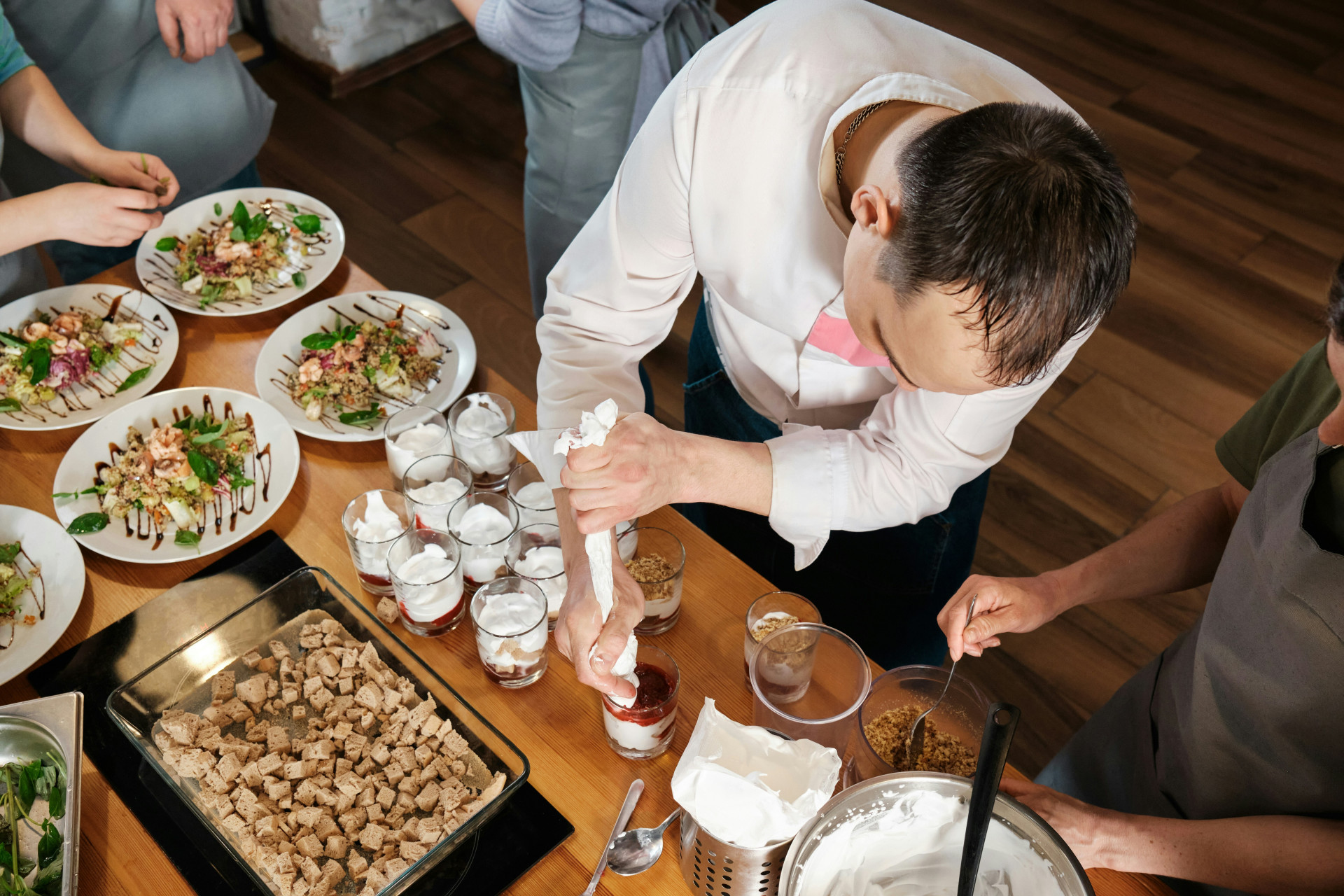
Even the best menu can fall flat if your team isn’t on the same page. Make sure everyone—from chefs to servers—understands the plan for the day.
- Hold a quick pre-service meeting to review the menu, service order, and any special considerations.
- Provide a written plan with a timeline, task assignments, and key contacts.
- Encourage questions – It’s better for someone to ask twice than for a guest to receive the wrong dish.
- Debrief after the event – Discuss what worked well and what could be improved next time.
When your staff feels informed and included, they work more efficiently and with greater confidence.
Use Visual Tools
Professional kitchens often rely on visual aids to stay organized—and you can, too, even on a smaller scale.
- Timeline on a whiteboard – Mark when each dish should be prepped, plated, and served.
- Color coding – Use colors to distinguish tasks, such as green for appetizers and blue for main courses.
- Photos of dishes – Especially helpful if multiple people are plating, ensuring consistent presentation.
These tools make coordination easier and help everyone see where you are in the process at a glance.
Læs også:

Expect the Unexpected
Even with the best plan, challenges can arise: a late delivery, an equipment failure, or a last-minute dietary request. The key is to have a backup plan.
- Keep a few extra ingredients on hand.
- Make sure everyone knows who makes decisions under pressure.
- Keep communication calm and solution-focused—panic spreads quickly.
Professional kitchens aren’t defined by perfection, but by how effectively they handle problems when they occur.
After the Event – Learn from Experience
Once the guests have left and the kitchen is clean, take a few minutes to reflect. What went smoothly? Where did communication break down? Which vendors delivered as promised?
Jot down quick notes while the experience is fresh. This makes it easier to refine your process next time and build routines that make each event more professional than the last.
Professional Planning Creates Calm and Quality
Planning a menu like a pro isn’t just about cooking—it’s about teamwork, structure, and communication. When everyone knows what’s happening and when, you free up energy for what matters most: creating a great experience for your guests.
With clear communication, organized planning, and a touch of flexibility, you can ensure that both vendors and staff work in sync—and that your menu impresses from the first bite to the final course.
Læs også: